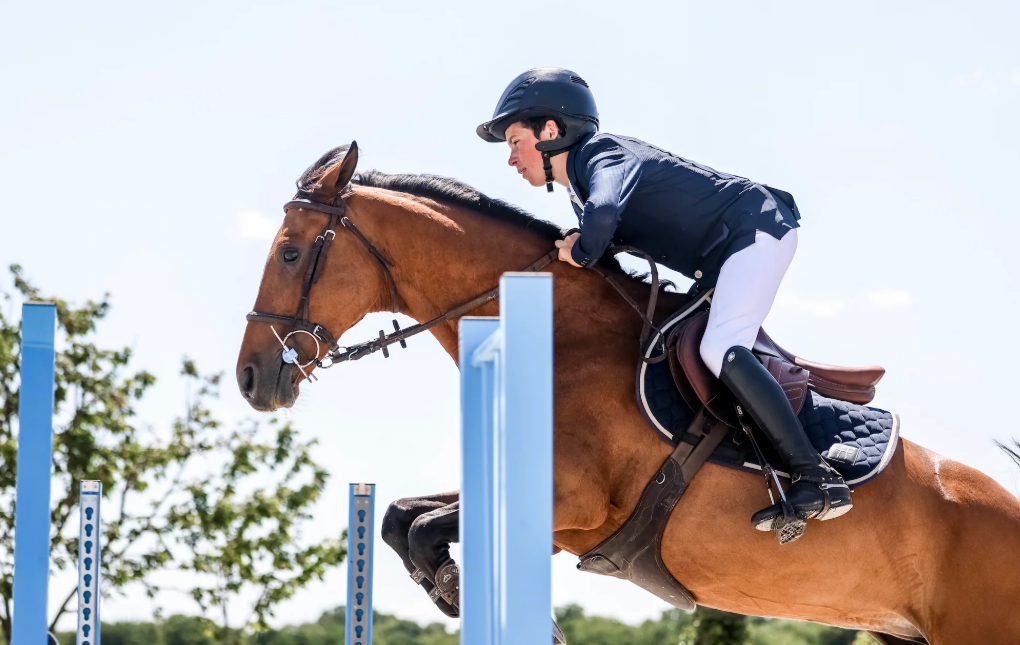
Horse riding encompasses everything from the precise movements of dressage to the speed and intensity of competitive racing. Each discipline demands a different combination of athletic ability, training, and communication between horse and rider. Show jumpers must approach fences at the right distance and adjust their stride, while racing jockeys manage pace, position, and acceleration in a crowded field.Not every equestrian discipline measures success in the same way. Dressage rewards the accuracy and quality of prescribed movements. Show jumping combines obstacle clearance with time and fault penalties. Racing is decided by finishing order, while endurance riding requires horses to cover long distances and pass veterinary inspections.
These differences shape how horses are bred, conditioned, equipped, and ridden. Understanding them provides a clearer picture of the skills involved in equestrian sports and the demands placed on both horses and riders.
The Role of Horses in Competitive Sports
Equestrian competition depends on a partnership between horse and rider. The horse supplies the physical power, while the rider influences how that power is used through balance, timing, and coordinated aids. Neither can perform effectively without the other.
Conformation, temperament, muscular strength, and cardiovascular fitness all affect a horse’s suitability for competition. A horse with a powerful jump and good coordination may perform well in show jumping without possessing the sustained speed needed for flat racing. Likewise, a horse bred for short-distance acceleration may struggle with the demands of endurance riding.
Training develops athletic ability, although it cannot eliminate physical limitations. Riders must also recognize how their position affects the horse. Uneven weight distribution can disrupt balance, while inconsistent rein or leg signals may cause hesitation during transitions.
Experienced partnerships rely on familiarity rather than force. Horses learn to respond to subtle cues, and riders become better at recognizing changes in rhythm, tension, and responsiveness. This coordination matters particularly in disciplines where a small mistake can affect the final score.
Different Types of Equestrian Sports
Equestrian competitions include judged performances, timed obstacle courses, long-distance events, and races. Although many share basic riding principles, their scoring systems and competitive objectives differ.
| Discipline | Main objective | How performance is assessed |
| Dressage | Perform prescribed movements accurately | Judges’ marks for movement quality and execution |
| Show jumping | Complete an obstacle course | Faults, time, and penalties under the applicable format |
| Eventing | Complete three competitive phases | Combined penalties from dressage, cross-country, and show jumping |
| Endurance riding | Complete a long-distance course | Finishing order or time, subject to veterinary requirements |
| Flat racing | Finish ahead of other horses | Official finishing order |
| Harness racing | Race while pulling a sulky | Finishing order and compliance with gait rules |
Horse Racing
Horse racing focuses on speed, pace management, and finishing position. Flat races take place over specified distances without obstacles, usually on turf, dirt, or synthetic tracks.
Jockeys ride with short stirrups in a forward crouch, using their legs to absorb the horse’s motion while keeping their upper bodies low to reduce aerodynamic drag. Their tactical decisions include when to challenge for position, whether to follow the early leaders, and when to ask the horse for its final acceleration.
Other horse racing competitions introduce different demands. Jump racing involves hurdles or fences, requiring horses to maintain momentum while negotiating obstacles. In harness racing, horses pull lightweight two-wheeled sulkies and compete at a prescribed trot or pace rather than a gallop.
Training priorities change with the type of race. Flat racers need speed and an efficient galloping stride. Jump racers must combine stamina with balance over obstacles, while harness racers are trained to maintain their permitted gait at racing speed.
Show Jumping and Dressage
Show jumping challenges horse and rider to negotiate a course of fences in the correct order. Courses may feature verticals, oxers, combinations, and related distances that require adjustments to stride length and rhythm.
Under the commonly used FEI Table A scoring system, knocking down an obstacle, a first refusal, or exceeding the time allowed can result in penalties. A second refusal normally leads to elimination under standard FEI jumping rules. Other competition formats may use different scoring procedures.
At elite international competitions, fence heights can reach approximately 1.60 meters, although specifications vary by class and event.
Dressage is judged differently. Horse and rider perform a prescribed test in an arena, normally measuring 20 × 60 meters for standard international competitions. Judges assess rhythm, suppleness, contact, impulsion, straightness, collection, and the accuracy of each movement.
Advanced tests include piaffe, passage, flying changes, and pirouettes. These exercises demand considerable strength and coordination, along with the ability to respond to subtle riding aids.
Although dressage and show jumping share foundations in balance and responsiveness, success in one does not guarantee success in the other. Each discipline asks something different of the horse.
Endurance Riding
Endurance riding tests a horse’s ability to cover substantial distances while remaining fit to continue. International events include distances such as 80, 100, 120, and 160 kilometers, although the full range of recognized formats depends on the governing rules and competition level.
Courses may cross hills, open countryside, and varied ground conditions. Riders must adjust their pace according to terrain, weather, and the horse’s condition rather than simply maintain maximum speed.
Veterinary inspections are central to the sport. Horses are examined at designated checkpoints, where they must satisfy criteria covering recovery, metabolic condition, and soundness. Failure to meet these requirements can result in elimination, even after the horse has completed the course.
Under FEI endurance rules, horses must also pass the required final veterinary inspection to receive a classified result. Crossing the finish line does not automatically establish successful completion.
A fast opening section offers little advantage if the horse cannot recover sufficiently to continue. Riders therefore need to recognize early signs of fatigue and adjust their pace before the horse’s condition deteriorates.
How Horse Racing Works
Every horse race operates under defined conditions covering distance, surface, eligibility, assigned weights, and starting procedures. These factors determine which horses can enter and influence how the race unfolds.
Flat races commonly begin from starting stalls. Once released, jockeys seek positions suited to their horses’ preferred running styles. Some horses perform best near the lead, while others settle behind the early pace before making a late challenge.
Distance strongly influences tactics. A quick start can be valuable in a short sprint, but maintaining an aggressive pace throughout a longer race may leave a horse without enough energy for the finish.
Race Distances and Track Types
Flat racing distances range from short sprints to extended staying contests. Classification varies between racing jurisdictions, so the categories below are general references rather than universal definitions.
| Race category | Typical distance | Main performance demands |
| Sprint | Around 1,000–1,400 m | Acceleration and sustained high speed |
| Mile | Approximately 1,600 m | Speed and controlled pacing |
| Middle distance | Around 1,800–2,400 m | Combination of speed and stamina |
| Staying race | Commonly 2,800 m or longer in British racing | Stamina and efficient energy use |
Some racing jurisdictions classify distances differently. For example, races around 2,400 meters may be regarded as staying contests in certain programs, while British classifications generally associate staying races with longer distances.
Track surfaces also affect performance. Turf conditions change with rainfall, maintenance, and ground firmness. Dirt tracks vary in moisture, depth, and compaction, while synthetic surfaces are designed for greater consistency but still differ between venues.
Track layout can be equally important. Tight bends, elevation changes, and the length of the finishing straight influence how comfortably a horse maintains its stride. A runner with strong late acceleration may benefit from a long straight, whereas one that struggles around sharp turns can lose valuable ground on a compact circuit.
Jockeys, Horses and Racing Rules
Horse racing rules are administered by national or regional authorities. Regulations concerning interference, equipment, riding conduct, and penalties vary between jurisdictions.
Jockeys must satisfy assigned weight requirements and avoid dangerous interference with other runners. Stewards review incidents involving obstruction, improper riding, or breaches of racing regulations.
Crossing the finish line first does not always guarantee victory. A horse may be demoted or disqualified if the stewards determine that a rule violation warrants a change to the official result.
Race conditions also influence the weight carried. In handicaps, horses receive different assigned weights according to the applicable handicapping system, with the aim of producing more competitive contests. In weight-for-age races, weights follow a prescribed scale based on age and, where applicable, sex.
Equipment regulations are similarly specific. Racing whips, for example, are subject to restrictions that can differ significantly between governing authorities.
Training Horses for Sport
Preparing a competition horse involves developing the physical capacity and technical skills required by its discipline. Workloads must account for age, health, previous experience, and the horse’s current condition.
Young horses generally begin with basic responses, coordination, and gradual exposure to new exercises. Experienced competitors follow more specialized programs, with training intensity adjusted around competitions and recovery periods.
Effective horse training combines physical conditioning with discipline-specific work. As competition approaches, trainers adjust the amount of conditioning and technical schooling according to the horse’s fitness, performance, and recovery.
Building Speed and Endurance
Speed and endurance depend on overlapping but distinct physiological adaptations. Short, intense efforts place greater demands on muscular power and anaerobic energy production. Longer, controlled exercise develops aerobic capacity and the ability to sustain work efficiently.
Racehorse training commonly includes cantering and galloping at different intensities. Sprint preparation places greater emphasis on acceleration and high-speed work, while horses preparing for longer races require conditioning that supports sustained pace. Both need an adequate aerobic foundation.
Endurance horses typically build fitness through gradually increasing periods of manageable exercise. Longer rides are introduced as the horse adapts, with attention to gait quality, hoof condition, and recovery.
Progression must be controlled because tendons, ligaments, and other supporting tissues may adapt more slowly than cardiovascular fitness. Increasing distance or intensity too quickly can raise the risk of injury.
Heart rate and recovery trends help trainers assess workloads, but these measurements should be considered alongside movement, appetite, behavior, and veterinary findings. Scheduled rest allows the horse to recover between demanding sessions.
Developing Balance and Coordination
Balance is essential for turns, transitions, jumping, and changes of pace. Training exercises help horses improve coordination while maintaining rhythm and responsiveness.
Transitions between walk, trot, and canter encourage controlled changes in balance. Circles and changes of direction develop coordination when performed without excessive leaning or loss of rhythm.
Ground poles help horses organize their steps and lift their limbs accurately. Raised poles and small obstacles can be introduced as confidence and control improve.
Lateral movements, including leg-yield and shoulder-in, develop responsiveness to riding aids and control of body position. Their difficulty should match the horse’s training level.
Tension, rushing, or repeated loss of rhythm may indicate that an exercise is too demanding or poorly understood. Reducing its difficulty is often more effective than repeatedly asking for the same unsuccessful movement.
Essential Horse Riding Skills
Good horseback riding requires a secure, adaptable position and clear communication. Riders must remain balanced as the horse moves while keeping their hands, legs, and seat sufficiently independent to give precise signals.
Beginners usually develop these skills at walk and trot before progressing to canter, jumping, or more advanced movements. The aim is not to apply stronger aids, but to use the appropriate signal at the right moment.
Continuous pressure can make a horse less responsive. A clear request followed by a timely release helps reinforce the intended response.
Rider posture also matters. Looking down may cause the upper body to tip forward, while excessive tension through the hips can restrict movement. Small positional errors become more consequential as speed and technical difficulty increase.
Body Position and Rein Control
In a classical upright riding position, the ear, shoulder, hip, and heel should form an approximate vertical line when viewed from the side. This provides a useful reference, although different disciplines require adjustments.
The rider should maintain a stable lower leg and relaxed hips, allowing the hands to follow the horse’s head and neck movement without losing appropriate contact.
Reins are used alongside the seat and legs to influence direction, flexion, and balance. Pulling continuously does not provide effective control. During a turn, for example, excessive use of the inside rein may bend the horse’s neck without guiding the body through the intended path.
At faster speeds, riders may adopt a lighter seat to reduce interference with the horse’s back. Show jumping requires a forward position over fences that allows the horse to extend its neck during takeoff and landing.
Racing jockeys use a more pronounced crouch designed for high-speed galloping. These horse riding techniques serve different purposes rather than representing a universal riding position.
Communication Through Riding Aids
Riders communicate primarily through the seat, legs, hands, and weight distribution. Voice cues are also used in some training situations and riding activities.
Leg aids can request forward movement, maintain impulsion, or influence lateral positioning. The seat helps regulate rhythm and transitions, while the reins refine direction and balance.
Timing is essential. During a transition from trot to walk, the rider prepares the horse by organizing its rhythm and balance, then coordinates seat and rein aids to request the slower gait. Once the horse responds, the aids should soften.
Conflicting signals, such as driving forward with the legs while pulling continuously on the reins, can create confusion or resistance.
Unusual behavior should not automatically be interpreted as disobedience. An unclear request, poorly fitted tack, insufficient preparation, or physical discomfort may explain a horse’s reluctance. Persistent changes warrant closer examination of its training and health.
Horse Breeds Used in Racing and Equestrian Sports
Selective breeding has produced horses with different athletic strengths. Thoroughbreds are closely associated with flat racing, Arabians with endurance riding, and many warmblood sport horses with dressage and show jumping.
These associations reflect common breeding goals rather than fixed limitations. Individual performance still depends on health, temperament, conformation, and training.
| Breed or type | Common competitive use | Typical characteristics |
| Thoroughbred | Flat racing, jump racing, eventing | Speed, athleticism, efficient gallop |
| Arabian | Endurance riding, Arabian racing | Stamina, agility, endurance aptitude |
| Standardbred | Harness racing | Ability to maintain a fast trot or pace |
| Warmblood sport horses | Dressage, show jumping, eventing | Athletic movement, jumping ability, trainability |
| Quarter Horse | Short-distance racing, Western disciplines | Rapid acceleration, muscular power |
| Irish Sport Horse | Eventing, show jumping | Versatility, jumping ability, stamina |
Among horse racing breeds, Standardbreds are associated with harness racing, where maintaining a fast trot or pace is essential. Quarter Horses are particularly prominent in North American short-distance racing, often over a few hundred meters.
Thoroughbreds also compete outside racing. Some enter eventing or other equestrian disciplines after their racing careers, although they require retraining to learn new tasks and riding expectations.
Warmblood is not a single breed designation. It encompasses several sport-horse populations and breeding programs, including Hanoverians, Dutch Warmbloods, and Holsteiners.
Choosing a competition horse should begin with the demands of the intended discipline and an assessment of the individual animal, rather than breed reputation alone.
Equipment for Horses and Riders
Horse riding equipment must fit correctly, support the rider’s position, and allow the horse to move comfortably. Its design varies according to the discipline.
Racing saddles are much lighter than general-purpose saddles. Dressage saddles accommodate a relatively upright position and longer leg, while jumping saddles support shorter stirrups and a forward seat.
Bridles, bits, protective equipment, and other tack are also subject to discipline-specific requirements.
| Equipment | Main purpose | Important consideration |
| Saddle | Supports rider position and distributes weight | Correct fit for horse and rider |
| Bridle and reins | Allow communication and directional control | Suitable adjustment and permitted design |
| Stirrups | Support rider balance | Appropriate length and safe release characteristics |
| Riding helmet | Reduces the risk of certain head injuries | Recognized safety standard and secure fit |
| Riding boots | Support safe foot positioning | Suitable heel and sole for the stirrup |
| Protective vest | Offers protection during falls or impacts | Correct fit and discipline-specific requirements |
| Saddle pad | Provides a layer between saddle and horse | Must not compensate for poor saddle fit |
A poorly fitted saddle can create pressure points, restrict movement, or shift during exercise. Damaged stitching, worn leather, and loose fastenings should be identified before riding.
Protective equipment reduces certain risks but cannot prevent every injury. Competition regulations may also restrict specific bits, spurs, protective boots, or other items, making it important to check the applicable rules before an event.
Horse Welfare and Safety in Competitive Riding
Competition places substantial physical demands on horses. Appropriate conditioning, veterinary care, and sensible workload management help reduce risks, but injuries and illness remain possible.
Daily welfare depends on suitable nutrition, access to clean water, hoof care, rest, and opportunities for normal behavior. Training intensity should reflect the horse’s condition rather than an inflexible competition schedule.
Lameness, changes in appetite, unusual reluctance to move, or prolonged recovery after exercise can indicate a developing problem. These signs require investigation rather than an automatic increase in training pressure.
Heat is another concern. Horses generate considerable body heat during exercise, and high temperatures or humidity can make cooling more difficult. Access to water, appropriate cooling procedures, and prompt veterinary assessment are important when heat-related illness is suspected.
Different disciplines present different hazards. Racing involves high speeds and close proximity between competitors, while jumping adds the risk of falls or collisions with obstacles. Ground conditions, course design, equipment maintenance, and appropriate supervision all contribute to risk management.
Riders also face injuries from falls and loss of control. Properly fitted helmets, suitable footwear, and instruction matched to experience are basic precautions. Beginners should train with qualified instructors and appropriately prepared horses before attempting faster work or jumping.
FAQ
What is the difference between horse riding and horse racing?
Horse riding includes recreational riding, training, and competitive disciplines such as dressage and show jumping. Horse racing specifically involves contests in which horses compete for finishing position, usually over a set distance.
Which equestrian sports are included in the Olympic Games?
The Olympic equestrian program includes dressage, show jumping, and eventing. Horse racing and endurance riding are not Olympic equestrian disciplines.
How long does it take to learn horse riding?
Beginners can develop basic balance, steering, and control during their first lessons. Becoming a confident independent rider usually requires consistent practice over months or years, depending on lesson frequency, instruction, and the skills being learned.
Which horse breeds are commonly used in racing?
Thoroughbreds dominate conventional flat racing in many countries. Quarter Horses compete in short-distance racing, Standardbreds in harness racing, and Arabians in certain racing formats. Eligibility depends on the race conditions and governing authority.
What is the most important skill in horse riding?
Balance is fundamental because it allows riders to remain secure without restricting the horse’s movement. Effective use of the seat, legs, and reins is equally important as riders progress to more demanding exercises.